Protecting Food Processing Operations Before Ignition Becomes Disaster
Fire risk is an often underestimated challenge in food processing environments. From cereals and snacks to peanuts, fibers, and rubber-based products, many commonly processed materials create combustible dust, oils, or fine particulates that can ignite when exposed to heat or sparks. In high-temperature systems with continuous airflow, even a single ember can travel unnoticed until it becomes a costly and dangerous event.
Spark detection and fire prevention technology is designed to address this risk proactively—detecting ignition sources in real time and stopping fires before they start. For food processors focused on safety, uptime, and compliance, this type of protection has become a critical component of modern plant design.
Fires in Food Processing: A Real and Ongoing Risk
While fires in food manufacturing facilities don’t always make headlines, they occur more frequently than many operators realize. According to data referenced by the National Fire Protection Association (NFPA), there are more than 5,000 fires annually in U.S. manufacturing and processing facilities, with additional incidents in agricultural and grain storage operations that often overlap with food production environments.
These incidents occur for a variety of reasons, but combustible dust is one of the most significant contributors. Many food products generate dust that can ignite under the right conditions. Materials such as flour, corn starch, sugar, spices, cereals, and grain-based ingredients are all considered potentially explosive when dispersed in air and exposed to an ignition source.
The danger is not limited to dry ingredients. Oil-rich products such as peanuts, high-fat snacks, and coated materials can also contribute to fire hazards. When combined with airflow, friction, or foreign objects, ignition sources can develop inside ducts, fans, dryers, or conveying systems.
The Hidden Danger: Sparks in Airflow Systems
Many food processing operations rely on pneumatic conveying, dryers, fans, and air handling systems. These environments can create conditions for sparks to travel undetected. A hot particle generated upstream—whether from mechanical friction, metal contamination, or overheated material—can be carried through ductwork and ignite accumulated dust downstream.
This type of delayed ignition is particularly dangerous. A small spark that goes unnoticed can smolder inside equipment, dust collectors, or ducts before developing into a larger fire. In some cases, this can lead to secondary explosions, which occur when an initial ignition disturbs settled dust and creates a much larger event.
These cascading incidents are one reason safety standards emphasize early detection. NFPA guidelines specifically reference spark detection and extinguishing systems as active prevention measures designed to stop ignition before combustion occurs.
Insurance and Compliance Considerations
Insurance providers and regulatory agencies place increasing emphasis on combustible dust mitigation and fire prevention in food manufacturing. NFPA standards — such as NFPA 61, NFPA 652, and NFPA 69 — are commonly referenced by insurance companies and local authorities when evaluating plant safety and risk exposure.
Facilities handling combustible dust are often required to conduct dust hazard analyses, implement prevention systems, and demonstrate risk mitigation strategies. These measures are designed not only to protect workers but also to reduce property loss and operational downtime.
The financial impact of a fire extends beyond equipment damage. Lost production, product contamination, facility cleanup, regulatory scrutiny, and insurance claims can significantly impact operations. Even minor incidents can result in extended downtime and reduced throughput.
As a result, many processors are moving toward proactive solutions that prevent ignition rather than relying solely on suppression systems that activate after a fire has already started.
How Spark Detection Prevents Fires Before They Start
Spark detection technology continuously monitors airflow for infrared signatures associated with sparks, embers, or hot particles. When an ignition source is detected, the system instantly activates a targeted extinguishing response—typically atomized water—neutralizing the threat before combustion occurs.
Unlike traditional fire suppression systems that may shut down entire production lines, spark detection systems are designed to respond locally. This targeted response allows production to continue while eliminating the risk.
Key benefits include:
Real-time spark and ember detection
Rapid extinguishing before ignition spreads
Minimal disruption to process
Targeted response without full system shutdown
Reduced downtime and product loss
Protection for ducts, dryers, and fans
Improved plant safety and compliance
This proactive approach helps facilities avoid catastrophic events while maintaining operational continuity.
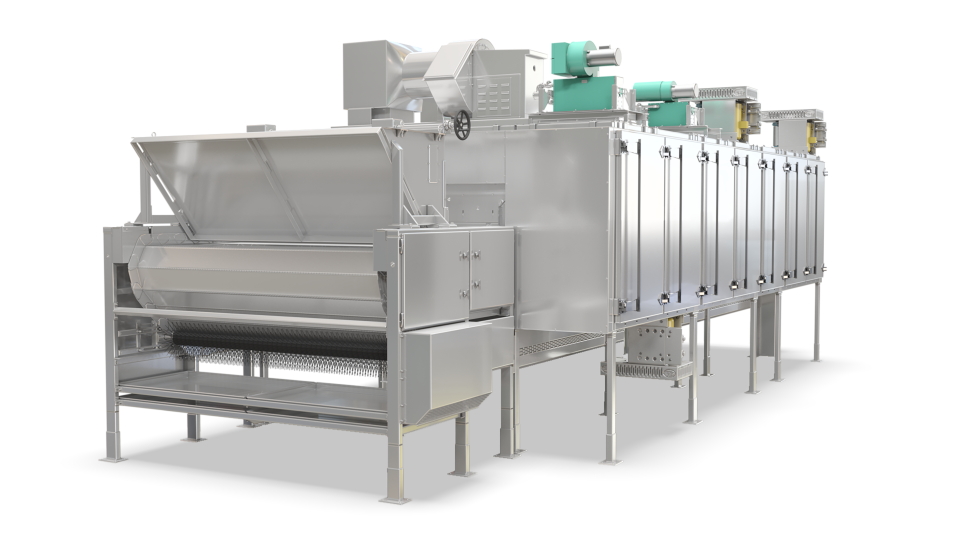
CPM provides integrated spark detection and fire prevention solutions engineered specifically for food processing environments. Installed directly into CPM SCF systems, these solutions are designed to detect ignition sources within the airstream and respond instantly.
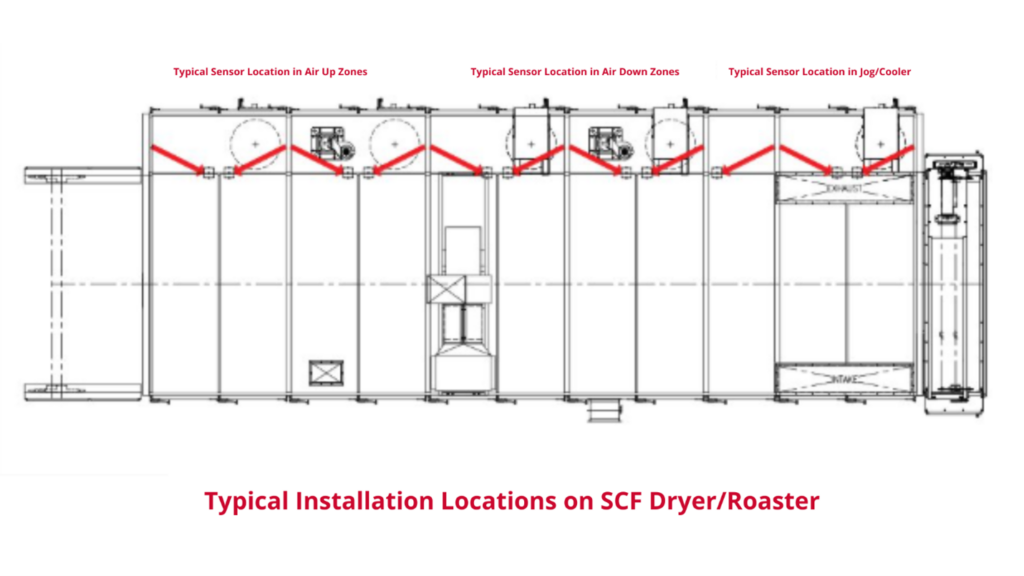
The system continuously monitors airflow using optical sensors positioned to inspect air exiting fan spaces. When a spark is detected, the system activates targeted extinguishing—neutralizing the ignition source before it can develop into a fire. Communication with CPM controls allows alarms and process adjustments without shutting down the entire operation.
Because the system is CPM-installed and engineered for the application, customers benefit from:
Factory-installed sensors and extinguishing equipment
Optimized placement for air-up or air-down systems
Integration with CPM controls and automation
Targeted extinguishing without full process shutdown
Increased uptime and reduced fire risk
Peace of mind for operators and plant managers
A Smarter Approach to Fire Prevention
Fires in food processing facilities are not rare—and the risks increase when handling combustible materials. With thousands of manufacturing fires occurring each year and combustible dust responsible for a significant share of incidents, proactive prevention is essential.
Spark detection and fire prevention solutions provide a smarter approach—stopping ignition at its source without interrupting production. For food processors focused on safety, uptime, and reliability, this added layer of protection helps safeguard people, equipment, and productivity.
With CPM’s integrated solution, protection is built directly into your process—so you can operate with confidence, knowing your system is designed to stop fires before they start.
Protect your process. Connect with CPM to add intelligent fire prevention to your operation today.